
Travel Ambience
Airplane Cabin Sounds for Sleep
Why airplane cabin ambience helps some people sleep, how it differs from white noise, and how Sleepzly’s Airplane Cabin worlds turn that texture into a place.
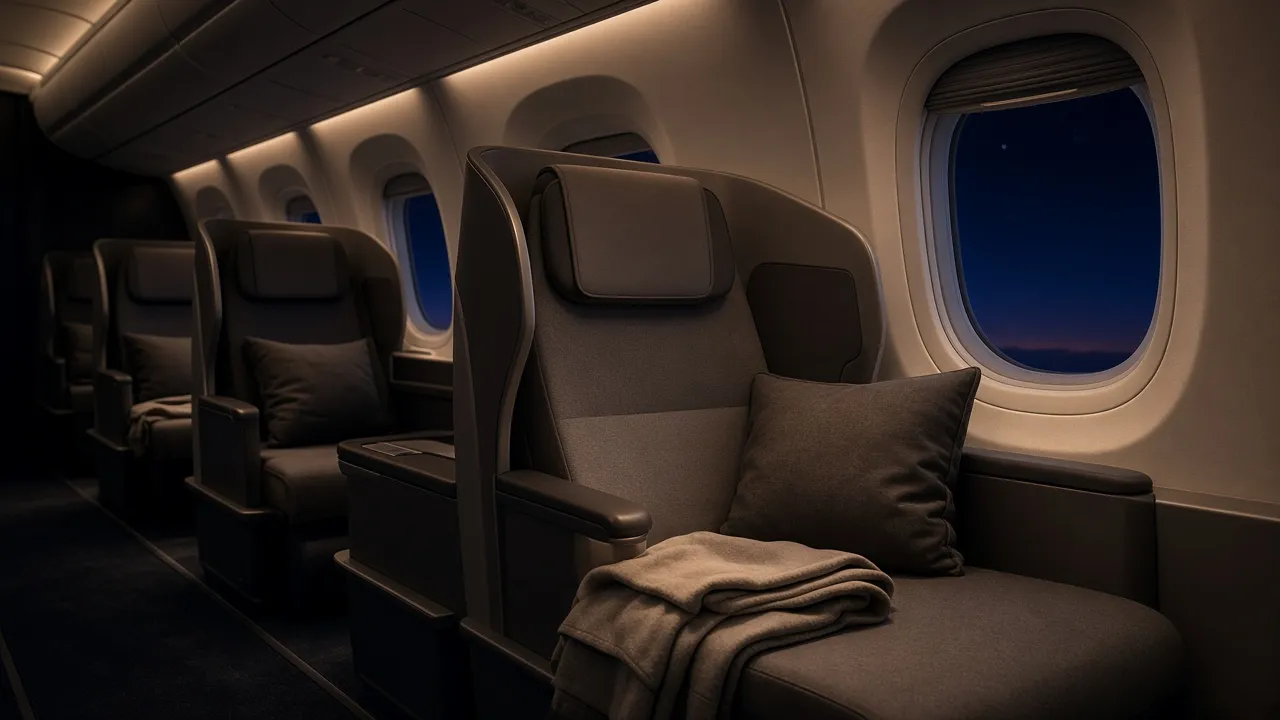
Airplane cabin sound is one of the few sleep textures that already has a story: dim lights, a long hum, nowhere to be until morning. Some people chase that on purpose at home. Others find it restless. Both reactions are normal.
This is not a claim that cabin noise deepens sleep stages. It is a guide to what the texture does well, where it fails, and how Sleepzly turns it into a place rather than a naked loop.
What people mean by “airplane sounds”
Searchers usually want one of three things:
- A continuous mechanical bed — engine/air-system hum without chatter.
- Travel-mode wind-down — the psychological cue of being in transit.
- Stronger masking than soft rain — especially in thin-walled rooms.
“Airplane cabin white noise” is a common label, but the ear often hears something darker and more stable than classic white hiss. If you already prefer brown noise, cabin beds may feel like a cousin. If you prefer bright masking, start with White Noise for Sleep or Brown Noise vs White Noise.
Why cabin ambience works for some sleepers
Cabin-like beds tend to offer:
- Long continuity — fewer hard silences where a hallway door becomes an event
- Low semantic load — mostly “system sound,” not a story you need to follow
- Familiar travel association — for people who sleep well on planes, that association can cue rest at home
Public-health guidance on sleep environments notes that fans or broadband sound can help camouflage disruptive noise. Cabin ambience is another continuous option in that practical family — not a clinical protocol.
Evidence that continuous noise improves sleep overall remains mixed and low-certainty in systematic review. Prefer cabin sound because the room feels duller and calmer, not because a clip promised deeper REM.
Cabin sound vs white noise vs nature
| Texture | Feels like | Often chosen when |
|---|---|---|
| White noise | Hiss / static | You need brighter masking of voices or clinks |
| Brown / dark noise | Rumbling bed | You dislike hiss and want weight |
| Airplane cabin | Mechanical travel hum | You want place + continuity |
| Rain | Weather mid-texture | You want softer, familiar nature |
Cabin audio fails when:
- engine detail feels anxious or “too real”
- the loop has obvious seams or voice announcements
- you keep turning it up against street noise instead of improving the room when you can
Practical setup at home
- Start 10–20 minutes before lights-out — not at the moment you force sleep.
- Keep volume comfortable and boring. If you need aggressive loudness, the room may be the real problem.
- Prefer room speakers over all-night in-ear playback when you can.
- Use the same cabin bed for several nights before judging it.
- If you wake when the sound stops, a gentle all-night level may help; if overnight playback bothers you, fade after wind-down.
In Sleepzly: cabin as a Sleep World
This is where Sleepzly is intentionally different from a generic airplane playlist.
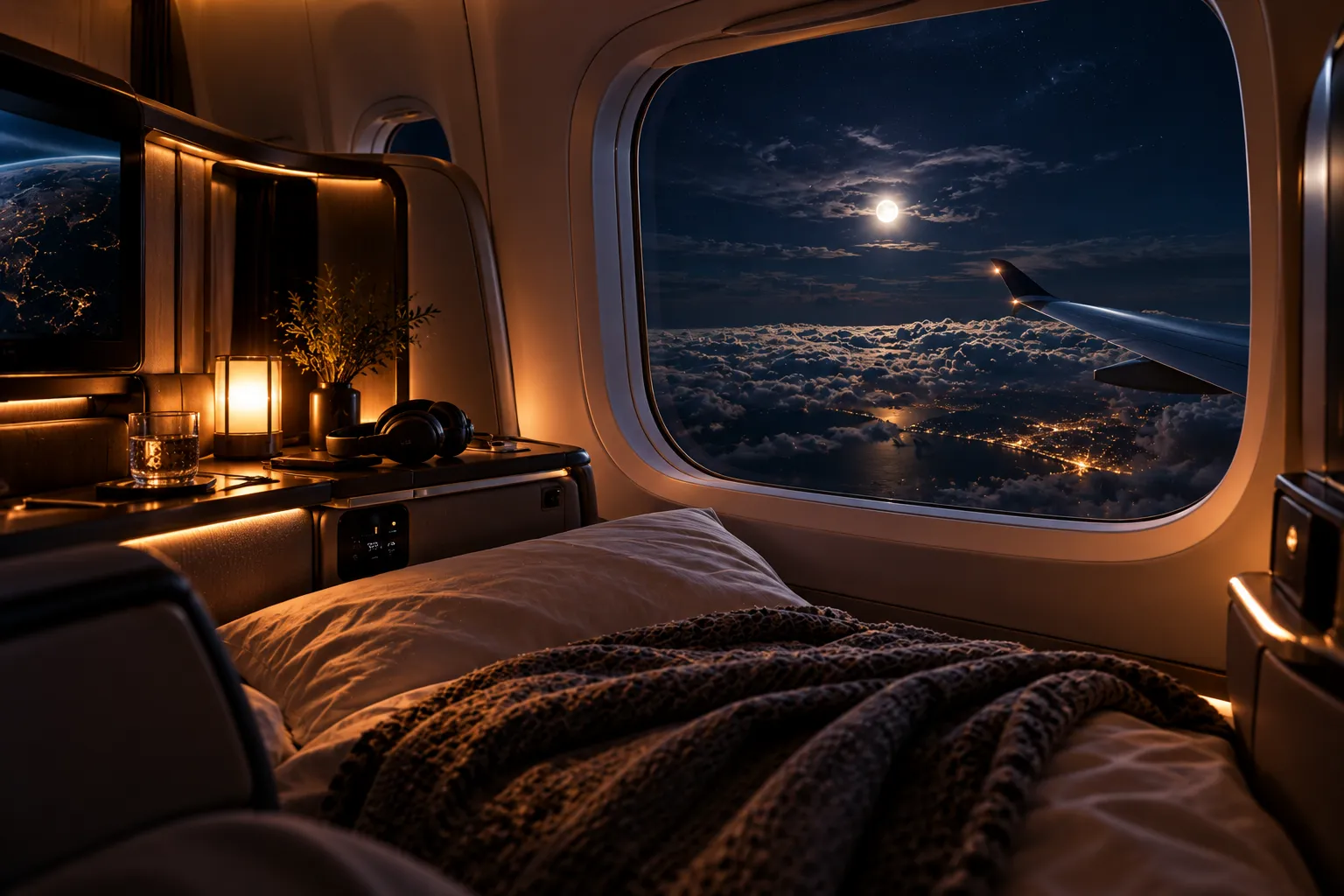
- Airplane Cabin — Premium travel-mode rest: steady cabin ambience as a visual place.
- Airplane Cabin Deep Sleep — a deeper cabin bed tuned for overnight flight energy.
Sleep Worlds pair sound with a dim environment so the cue is “be here,” not “manage a mixer.” For how Worlds differ from a plain mix, see What Are Sleep Worlds?. Browse the full set on Sleep Worlds.
Prefer a custom stack? Use cabin-adjacent texture from the ambient library in the Active Mixer, optionally with a quiet brown underlayer — one slider change at a time.
Travel nights vs home nights
On a plane: cabin sound is already there. Headphones can help against chatty rows; keep volume modest and follow airline and hearing common sense.
At home: you are borrowing the psychological texture. You do not need jet engines in the walls. You need a steady bed that stops asking questions.
Limits
Airplane ambience will not fix jet lag by itself, cure insomnia, or block every neighbor. It will not replace earplugs, a better schedule, or clinical care when those are needed. It is a continuity and place tool — often an excellent one for people who already sleep to engines.
Bottom line
Choose cabin sound when you want mechanical steadiness with a travel cue. Choose white or rain when you want brighter masking or softer weather. For city thin walls without the travel story, see Sleep Sounds for Apartments. In Sleepzly, start with Airplane Cabin or Airplane Cabin Deep Sleep, keep the volume dull, and let a few nights decide.
Sources
- Noise as a sleep aid: A systematic review — PubMed / Sleep Medicine Reviews
- Create a Good Sleep Environment (noise masking tips) — CDC / NIOSH
FAQ
Is airplane cabin noise the same as white noise?
Not exactly. Classic white noise is brighter and hissier. Cabin ambience is usually a steadier mechanical bed with more mid and low energy — closer to what many people hear as brown-leaning rumble than as radio static.
Can cabin sounds help if I am not traveling?
Yes for some people. The job is familiarity and continuity at home, not recreating jet lag. If engine beds feel anxious rather than cozy, try rain or softer color noise instead.
In Sleepzly
Related experiences
Feature
Ambient Library
Rain, oceans, storms, fireplaces, forests, rivers, fans, and more.
Feature
Active Mixer
Layer sleep sounds and tune each one independently.
Feature
Sleep Worlds
Immersive Premium environments shaped by sound and atmosphere.
Sleep World · Premium
Airplane Cabin
Steady cabin ambience for travel-mode rest.
Sleep World · Premium
Airplane Cabin Deep Sleep
Deep cabin noise tuned for overnight flights.
Related guides

editor pick
Brown Noise for Sleep: What It Is and What We Know
What brown noise is, how it differs from white and pink noise, what research does and does not show, and how to try it at night without hype.
editor pick
White Noise for Sleep
What white noise is, how it helps with sound masking at night, what the evidence does and does not show, and how to use it safely and without hype.

editor pick
Sleep Sounds: A Practical Guide to Sound at Night
How sleep sounds help with masking and wind-down, how to choose noise or nature ambience, and what the evidence does and does not support.

editor pick
Brown Noise vs White Noise for Sleep
How brown noise and white noise differ at night, when each may help with masking, and how to choose without hype or unverified sleep claims.